 Skip to content
Why Pet Hair Is So Hard to Remove from Car Interiors
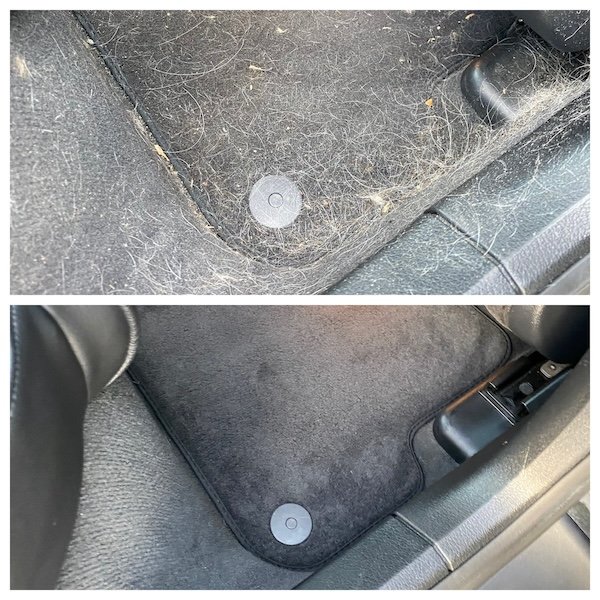
Pet hair isn’t like normal dust or debris. It’s fine, light, and clings to surfaces due to static electricity. Many vehicle interiors are made from textured cloth or synthetic materials that act like Velcro for fur, trapping it in fibers where it’s tough to reach.
The key to success? The right tools, techniques, and order of operation.
1. Rubber Gloves: Simple, Affordable, Effective
One of the most effective DIY tools for pet hair removal is also one of the cheapest: rubber gloves.
Here’s how it works:
- Put on a pair of damp rubber gloves (dish gloves work perfectly).
- Rub your hand across the fabric surface in a circular motion.
- The friction and slight moisture will cause pet hair to clump together.
- Pick up and toss the clumps in the trash.
It’s perfect for cloth seats, carpeted cargo areas, and even door panels.
2. Pet Hair Removal Brushes and Stones
Certain tools are designed specifically for embedded pet hair—especially for vehicles with plush carpets or upholstery.
Our top choices:
- Lilly Brush: Great for fine pet hair on cloth seats or armrests.
- Fur-Zoff Stone: Made from recycled materials, this stone is ultra-effective on carpeted flooring and trunk liners.
Be gentle—while these tools are powerful, they can damage delicate materials like leather or vinyl if used improperly.
3. Use a Vacuum After Loosening the Hair
Vacuuming is a must, but don’t expect it to do all the heavy lifting on its own. It works best after you’ve loosened the hair using gloves or a brush.
Best vacuuming method:
- First, go over the area with your chosen pet hair remover.
- Then vacuum slowly using a crevice tool or upholstery attachment.
- Make multiple passes, and don’t rush—slow, deliberate movements work best for deep extraction.
A high-suction vacuum with a HEPA filter is ideal for removing both hair and dander allergens.
4. Use a Light Fabric Softener Spray to Release Hair
A fabric softener solution can help break the static bond between pet hair and upholstery.
What to do:
- Mix 1 part liquid fabric softener with 3 parts water in a spray bottle.
- Lightly mist the seats or carpet (avoid over-saturating).
- Let it sit for 5–10 minutes.
- Brush the hair out and vacuum up the clumps.
This trick works especially well for finer pet hair that’s hard to see but easy to feel.
5. Keep a Lint Roller for Quick Touch-Ups
For fast cleanups and daily maintenance, nothing beats a lint roller. Keep one in your glove box or center console for emergencies.
Great for:
- Seatbacks and cushions
- Headrests
- Door panels
- Soft-touch dashboards
While it won’t deep clean your car, it’s a great tool for keeping up appearances between full details.
6. Use Pet Seat Covers or Cargo Liners
The best way to deal with pet hair is to stop it from settling into your car in the first place.
Invest in:
- Machine-washable pet seat covers
- Waterproof cargo liners
- Hammock-style protectors for the back seat
They not only catch fur but also protect your upholstery from scratches, drool, and muddy paws. Just toss them in the wash after a trip to the park or vet.
7. Call a Professional for Deep Cleaning
If you’ve tried everything and your car still looks like your pet lives in it, it may be time for a professional interior detail.
At Aesthetic Auto Salon, we offer:
- Deep pet hair removal from carpets and upholstery
- Hot water extraction for stubborn debris and stains
- Steam cleaning for odor and allergen control
- UV protection on interior plastics and vinyl
We use commercial-grade tools like high-pressure steamers, pet-hair-specific brushes, and high-powered vacuums to reach places household tools can’t. If you or a loved one has pet allergies this may be the only way to fully rid your vehicle of allergy causing pet hair and dander.
How Often Should You Remove Pet Hair from Your Car?
If you’re traveling with your pet regularly, we recommend:
- Light cleanings once a week
- Full interior details every 2–3 months
This helps minimize hair buildup, reduce allergens, and keep your vehicle in top condition—especially if you drive clients, kids, or guests frequently.
Final Thoughts
Removing pet hair from your car isn’t impossible—but it does take patience, the right tools, and a bit of elbow grease. Whether it’s a shedding shepherd or a long-haired tabby, these tricks can help you stay ahead of the mess.
For a truly fur-free finish, trust the pros at Aesthetic Auto Salon in Kirkland, WA. We bring high-end mobile detailing services right to your driveway—and yes, we love pets, too.
Book your interior detail today and take back your cabin from the clutches of pet hair!
OUR SERVICES
Why choose a 5-Year Ceramic Coating by Gtechniq? Durability: Up to 5 years of…
Premium Paint Correction services in Lynnwood LEARN MORE FREE ESTIMATE What is a paint correction…
Did you know that regularly applying wax is a vital step to protecting your vehicles…
Let’s face it, your car’s interior takes a beating-crumbs, coffee spills, pet hair – they…
